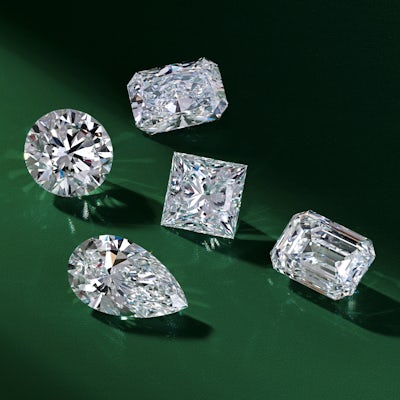







I still remember the first time I held a pear shaped diamond under the bench light. It was nearly twenty years ago, at a small boutique in Melbourne, and the way the facets caught the light — like a raindrop frozen mid-fall — stopped me mid-sentence. Even after years of cutting, polishing, and designing rings for clients all over Australia, that particular silhouette still gives me pause. There’s something undeniably poetic about it: elegant, timeless, and just a touch dramatic.
Over the last few years, the pear shaped diamond ring has made a remarkable comeback. You might’ve noticed it gracing the hands of celebrities, popping up in minimalist engagement shoots on Instagram, or even sitting in your best mate’s jewellery box. But beyond its graceful appearance, this stone shape tells a story — one that’s as much about craftsmanship and sustainability as it is about romance.
The Perfect Balance Between Classic and Contemporary
A pear shaped diamond, also known as a “teardrop cut,” sits right between the traditional round brilliant and the more daring marquise. It’s the perfect in-between — part classic, part contemporary. What makes it so captivating, though, isn’t just its look, but its personality.
When I design for clients, I often ask them how they want their ring to feel. Some say “timeless,” others “unique,” and a few just shrug and say, “I want something that doesn’t look like everyone else’s.” The pear shape ticks every box. Its tapered end elongates the finger, and depending on the setting, it can look soft and romantic or bold and modern.
One of my favourite tricks? Setting the pear slightly off-centre. It adds a playful asymmetry that feels fresh without losing its elegance. You don’t see it every day, but when you do, it turns heads.
A Shape With History (and a Hint of Mystery)
The pear cut dates back to the 1400s — yes, that far. It was first developed by a Flemish polisher named Lodewyk van Berquem, who introduced the idea of symmetry in diamond cutting. Imagine that: someone in medieval Europe working with primitive tools, managing to create a shape that’s still adored today.
What’s wild is how the meaning of the shape has evolved. Historically, it symbolised tears of joy or sorrow — the duality of emotion. These days, it’s more about individuality and emotional depth. I’ve had clients tell me they chose the pear cut because it reminded them of rain, or because it “felt alive.” And honestly, that’s the beauty of it. It’s not just a shape; it’s an expression.
The Sparkle Factor: Why the Cut Matters
Now, if we get a bit technical (bear with me — jeweller’s habit), the brilliance of a pear shaped diamond depends heavily on proportions. Too long, and you lose fire; too wide, and it looks clumsy. The sweet spot usually sits around a length-to-width ratio of 1.45 to 1.55.
But the real secret is in the polish and symmetry. The “bow-tie effect” — a faint dark shadow across the middle — can either ruin or enrich the look. A well-cut pear shows just a whisper of that shadow, giving depth without dullness.
When clients ask whether it’s a durable shape, I always mention the pointed tip. It’s the most vulnerable part of the diamond, so it should always be protected by a prong or bezel. Done properly, it’ll last a lifetime — or several.
The Rise of Lab Created Diamonds
This is where things get really interesting. A decade ago, if someone mentioned lab created diamonds, most jewellers would’ve raised an eyebrow. Today, they’re not just accepted — they’re celebrated. And rightly so.
The technology behind them is extraordinary. These stones are grown in controlled environments that replicate the natural conditions under which diamonds form — heat, pressure, carbon, time. The result? A diamond that’s chemically, physically, and optically identical to a mined one. The only real difference is the story it tells.
You might not know this, but lab-grown diamonds are now being used in fine jewellery and engagement rings across the world. Even major houses have started including them in their collections. They’re traceable, conflict-free, and usually priced 30–40% lower than mined stones — which means more couples can afford the dream ring they actually want.
If you’d like to dive deeper into the craftsmanship and global movement behind this trend, there’s a fascinating read about lab created diamonds that explores how the jewellery world has embraced innovation without losing its romantic roots.
Designing the Perfect Pear
Choosing a pear shaped diamond isn’t just about size or carat weight; it’s about composition. I’ve had clients come in convinced they wanted a one-carat stone, only to fall in love with a smaller pear that looked larger thanks to clever proportions and a bright cut.
Settings also play a huge role. Solitaire designs showcase the stone’s silhouette beautifully, while halos add vintage charm and amplify sparkle. East-west settings (where the pear lies horizontally) are trending at the moment — they feel bold, architectural, and a little rebellious.
For those drawn to sentiment, two-stone rings — often called “Toi et Moi” — combine a pear with another cut (say, a round or an emerald) to symbolise two souls meeting. It’s incredibly poetic, and no two designs ever look alike.
If you’re browsing for ideas or just want to see what’s possible, the team at NOVITA has a stunning range of lab-grown pear cut engagement pieces that balance classic beauty with modern sustainability. Their pear shaped diamond ring collection is one I often recommend to clients who want quality and conscience in the same piece.
Why Pears Feel So Personal
Here’s something I’ve noticed after years of helping people choose engagement rings: every shape attracts a certain kind of personality. Round cuts often go to those who love tradition. Emerald cuts? Sophisticated, confident types. But pears — pears are chosen by people who don’t mind standing out a little.
There’s emotion in that asymmetry, a story in the curve. It’s not perfect — and that’s the point. Life, love, relationships — they all have edges and soft spots. The pear shape captures that duality beautifully.
I had one client tell me she chose a pear because “it looks like a drop of hope.” That stayed with me. In all the technical talk about facets and carats, it’s easy to forget that jewellery is, at its heart, emotional. It’s how we mark the moments that matter.
Sustainability, Value, and the Future
If you’d asked me ten years ago whether lab-grown diamonds would become mainstream, I might’ve laughed. But today, it’s clear: this is the future of fine jewellery. Younger buyers, especially, are more conscious of sustainability and transparency. They want to know where their diamonds come from, not just how they look.
And here’s the thing — lab-grown doesn’t mean lesser. Far from it. In fact, the clarity and colour consistency you can achieve in the lab is often better than in natural stones. For investors or collectors, that’s huge.
What excites me most, though, is the creative freedom. Because the cost is lower, designers can play with bolder ideas — custom cuts, larger carat weights, intricate settings — without sending clients into shock. It’s democratised beauty, in a sense.
How to Choose Your Pear (Without Overthinking It)
If you’re currently shopping for an engagement ring, here’s a little advice from someone who’s seen it all:
Look at proportions, not just carat size. A well-cut 0.9ct pear can look bigger and brighter than a poorly cut 1.2ct.
Check the symmetry. The point should align perfectly with the centre of the rounded end. If it doesn’t, your eye will pick it up immediately.
Mind the setting. Protect that tip! A V-prong or bezel is your best friend.
Try different orientations. Point up, point down, east-west — you’d be surprised how much personality that small choice adds.
Trust your gut. The right ring doesn’t need convincing. You’ll feel it.
And honestly, don’t stress too much about trends. Whether you’re drawn to vintage halo settings or sleek, minimalist solitaires, the pear cut adapts effortlessly. It’s versatile enough to evolve with your style over decades — and that’s something few designs can promise.
Beyond the Diamond: The Sentiment That Lasts
At the end of the day, no matter how much the industry evolves — new tech, ethical sourcing, sustainability — the heart of jewellery remains the same: connection. Every ring carries a story.
For some, it’s the memory of a proposal under a gum tree by the coast. For others, it’s a family heirloom reimagined with a modern twist. And for many couples today, the idea of blending romance with responsibility — choosing a lab-grown pear for ethical reasons — adds another layer of meaning.
That’s why I love what I do. Designing pieces that don’t just look beautiful but feel meaningful. Rings that catch the light in a way that makes people pause, just like I did that day in Melbourne all those years ago.
A Final Thought
The pear shaped diamond isn’t for everyone — and that’s precisely why it’s special. It’s a little unconventional, a little romantic, and utterly unforgettable. It celebrates contrast: soft yet bold, traditional yet forward-thinking.
And perhaps that’s the real reason it’s having such a moment. In a world that’s obsessed with uniformity, the pear stands out for its individuality. Just like love itself — perfectly imperfect, endlessly fascinating, and shining brightest when it’s truly yours.