




A jewellery company’s background can tell buyers something useful, but only if the story connects to how its products are chosen, graded and made.
The Novita lab diamonds story developed alongside a broader change in diamond jewellery: laboratory-grown diamonds became a practical option for engagement rings, wedding jewellery and fine pieces rather than a specialist curiosity. Novita Diamonds built its business around that category instead of adding lab-created stones to an existing mined-diamond catalogue.
Published company profiles trace Novita’s beginnings to Australia and identify Iris Arnold as its founder. The company later established a Singapore business, with Novita Diamonds Pte. Ltd. incorporated on 8 October 2021.
That background explains part of the company’s identity, but buyers still need to judge each diamond and piece of jewellery on its own merits.
Why Building Around Lab-Grown Diamonds Matters
There is a practical difference between a jeweller that occasionally sells laboratory-grown stones and one whose product range was built around them.
Lab-grown diamonds are diamonds produced under controlled conditions rather than extracted from the earth. Common production methods include Chemical Vapour Deposition, usually shortened to CVD, and High Pressure High Temperature, or HPHT.
Their laboratory origin does not remove the need to assess normal diamond characteristics.
A buyer should still examine:
- cut quality
- colour grade
- clarity grade
- carat weight
- physical measurements
- shape and proportions
- grading documentation
- fluorescence where relevant
That distinction matters because “lab-grown” describes origin, not whether a particular stone has attractive proportions or suits a particular ring.
For shoppers comparing man made diamonds, looking beyond origin and reviewing the individual grading details can produce a much more useful comparison.
The Name Reflects the Original Idea
Published descriptions of the business connect the name “Novita” with the idea of something new. That choice fits a company created around a relatively new retail model for diamond jewellery.
Still, a brand story should never replace product information.
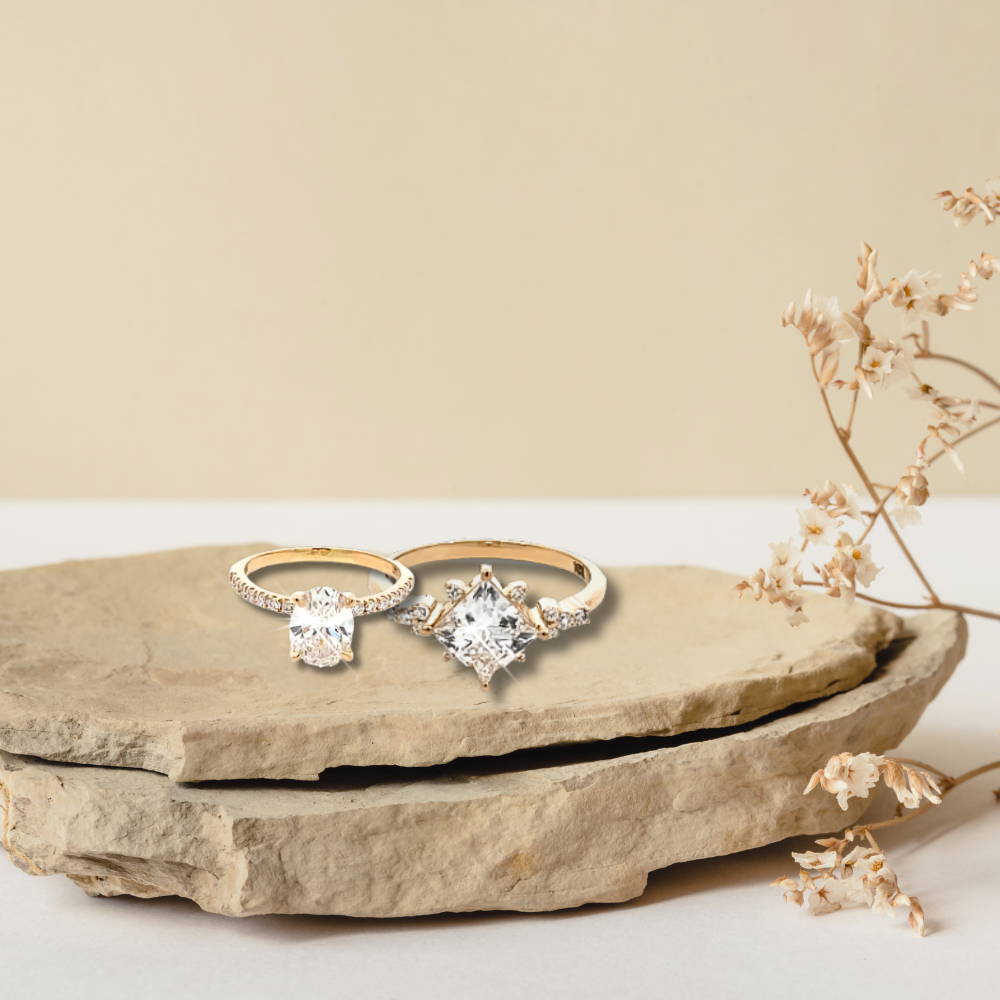
Someone choosing an engagement ring in Singapore may care more about how a 1.5-carat oval diamond faces up on the finger, for example, than the history behind the company selling it. Another buyer may be deciding whether to spend more on carat weight, a higher colour grade or a more detailed setting.
Those are the decisions that determine how the finished ring actually looks and wears.
A Bigger Diamond Is Not Automatically the Better Choice
Lab-grown diamonds can change how buyers allocate a jewellery budget because the relationship between size, specifications and price may differ from mined diamonds.
That can encourage buyers to consider larger stones, but carat weight alone gives an incomplete picture.
Two diamonds with the same carat weight can appear different in size because their proportions distribute weight differently. An oval, pear or marquise diamond also needs to be assessed for its length-to-width ratio rather than judged only by the number on the grading report.
Cut deserves particular attention with round brilliant diamonds because poor proportions can reduce brightness even when colour and clarity grades look impressive on paper.
Likewise, paying for extremely high clarity may offer limited visual benefit if a lower clarity grade is already eye-clean at normal viewing distance.
The useful question is not “Which grade is highest?” It is “Which specifications will actually affect what I can see?”
Setting Design Changes the Buying Equation
The diamond is only one part of an engagement ring.
A large centre stone placed high above the finger may create a dramatic profile, but it can also catch more easily on clothing. A lower basket may feel more practical for daily wear, although it can affect how closely a straight wedding band sits beside the engagement ring.
Setting style changes the balance again.
A solitaire keeps attention on the centre stone. Pavé adds smaller diamonds along the band but introduces additional stones and prongs that need inspection over time. A bezel surrounds more of the diamond and can provide greater edge protection, though it creates a different visual effect from exposed prongs.
Hidden halos add detail beneath the centre diamond without creating the same face-up appearance as a conventional halo.
These construction choices often have a greater effect on everyday satisfaction than moving from one already-high clarity grade to the next.
What the Singapore Presence Means for Local Buyers
Novita Diamonds Pte. Ltd. is registered in Singapore as a jewellery retail business, giving local buyers a Singapore-based point of reference for the brand. Public records show the company was incorporated in October 2021.
For a Singapore customer considering a custom engagement ring, practical questions should still come before brand familiarity.
Ask how ring sizing is handled before ordering. Check whether the design can later be resized, particularly if the band contains diamonds around much of its circumference. Confirm expected production arrangements for customised pieces and understand the process for alterations or servicing.
If an engagement ring will eventually sit beside a wedding band, discuss the pairing before approving the final setting. Basket shape, prong position and centre-stone height can determine whether the two rings sit flush or leave a deliberate gap.
Certification Should Support the Diamond Decision
The most useful part of the Novita lab diamonds story for a buyer is the idea that laboratory origin can be separated from diamond quality.
A grading document provides an independent framework for reviewing characteristics such as carat weight, colour, clarity and cut information where applicable. Buyers should match the report to the diamond and review the specifications rather than treating the existence of a certificate as proof that the stone is automatically a good choice.
It is also sensible to ask which laboratory issued the report, whether the diamond carries an identifying inscription and whether any post-growth treatment is disclosed where relevant.
Certification cannot tell someone which ring design they will prefer. It can, however, make technical comparison clearer.
A Better Way to Read the Brand Story
Novita’s development reflects a broader change in how diamond jewellery can be purchased: origin, grading, design and budget can be considered as separate decisions rather than bundled into a single assumption about what a diamond should be.
For Singapore buyers, that creates useful flexibility, but it also makes careful comparison necessary.
Start with the visible priorities. Decide which shape appeals to you, how large you want the stone to appear, which colour range works with your chosen metal and what clarity level gives a clean appearance. Then examine the setting for comfort, stone security and wedding-band compatibility.
Brand history can provide context. The diamond report, proportions, setting construction and suitability for daily wear provide the information that should shape the final purchase.